History of the Internet Users in the World
- Bon Habler
- Jan 23, 2025
- 4 min read

Dynamics of World Internet Users
Today, I was dealing with the data about the historical change of the world internet populations by World Bank.
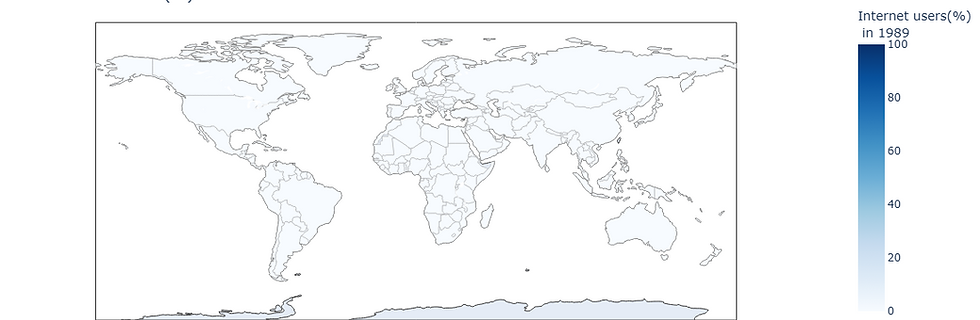
In 1989, all countries' scores were zero...! There was no general person who used the Internet until 1989 or the World Bank did not exist/ collect data until 1989. Interestingly, it was the same year when the war criminals of WWII accomplished the fall of the Berlin Wall (the end of post-war liberal regime in Germany).
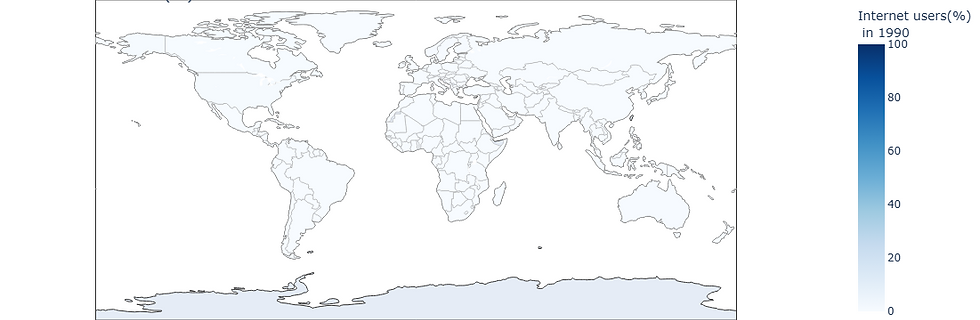
In 1990, the internet users are still very small, but there are some users slightly in US and Norway had 0.78% and 0.70% internet users over the total population.
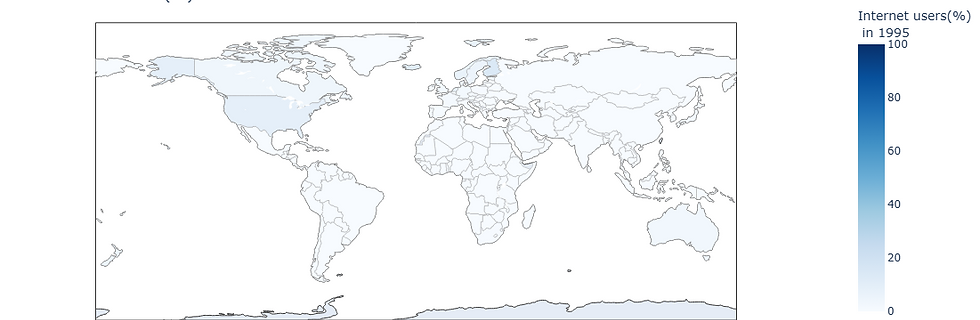
In 1995, you can slightly detect the "blue" countries such as US and Nordic countries. In the year, Finland became the top Internet user country with 13.9%, followed by Iceland with 11.2% and US with 9.23%. At that time, assumingly, Nokia was the world leading company for Information Technology.
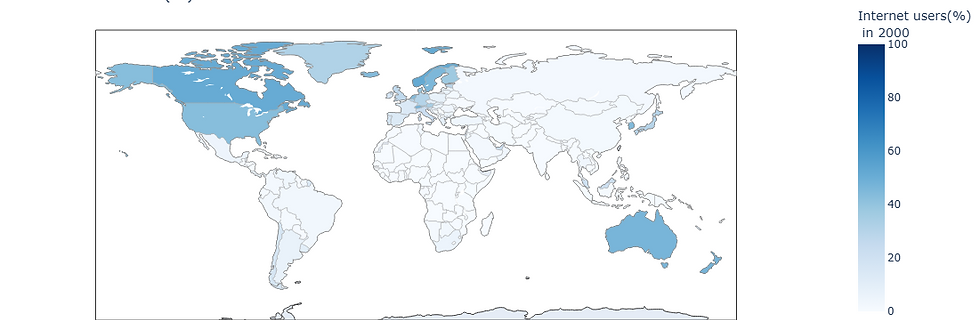
In 2000, you can find some obvious blue countries among the "developed" countries. Internet users became majority in Norway (52%) and Canada (51%). Oceanian countries had big percentages, 47% in New Zealand and 46% in Australia. In South Korea, 44% of the total population used the Internet. It seems the wave of the Internet has arrived in the Pacific Ocean until 2000.
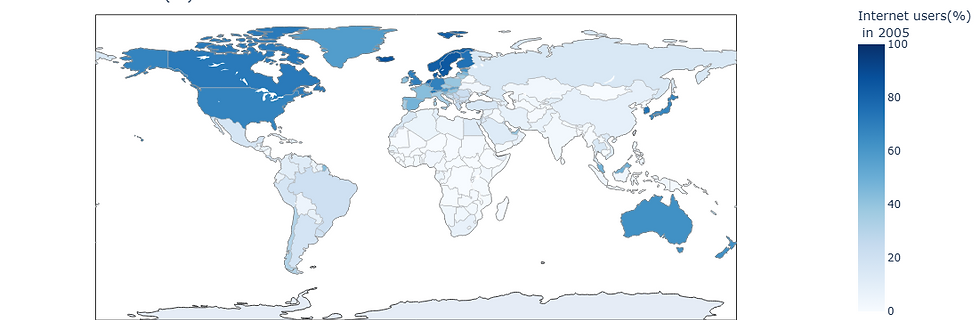
In 2005, the north part of the Atlantic Ocean became dark blue, followed by the Pacific Ocean. The top 5 Internet user countries are: Iceland (87%), Sweden (84%), Denmark (82%), Norway (82%), and Netherland (81%). It formed the image of the democratic north European countries.
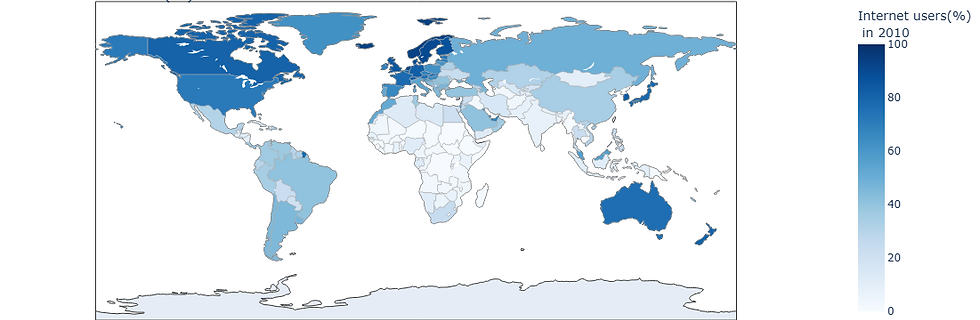
In 2010, the top Internet user countries are almost the same. But the users in Eurasia, Middle East and Latin America saw a dramatical increase.
In 2015, the expansion of the Internet continued. In the top 10 countries, there were Bahrain and Qatar. Perhaps, this trend was linked to the Arab Spring in 2011.

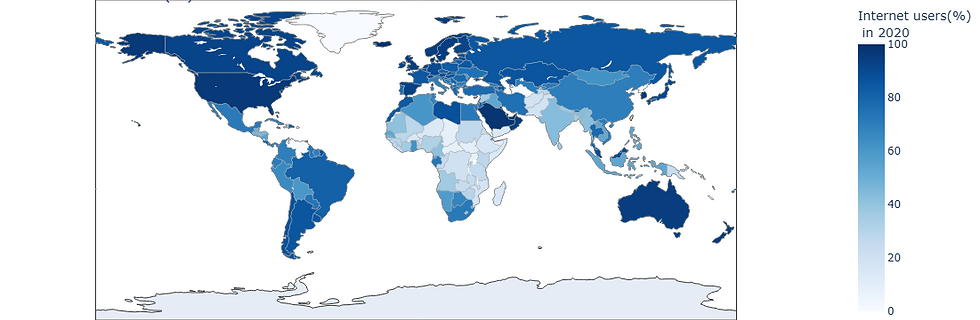
In 2020, the north part of the world became dark blue. And the Gulf countries surpassed Nordic countries. For example, UAE had the score of 100%, followed by Bahrain and Qatar (99%). Since Arab Spring, perhaps, the pirates group (the past imperial navy of WWII who invented or spread the Internet) moved their hub to the Gulf countries gradually.
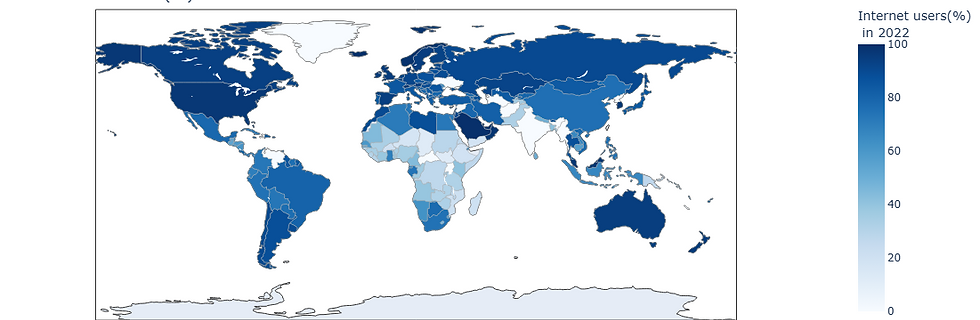
And here is the latest map in 2022. The world bank data has lots of blanks in the data of 2023. So, 2022 is the latest version which I can make an adequate choropleth map.
The whole world became full of dark blue colors. Especially Nordic countries and Gulf countries have almost 100% score. Interestingly, it is almost the same as the oil rich countries' area. On the other hand, some countries quit using the Internet or submit data to the World Bank for political reason such as Afghanistan and Venezuela.
Conclusion
The Internet has spread since 1990. This year is exactly the same year when the past communist countries experienced the war and the fall. So, assumingly, the technology of the Internet was spread as a way of anti-communists' technology development project which caused numerous wars in the world.
In the first phase, North Europe and North America led the consumption of the Internet, and gradually, it spread to the east Asia/ Oceania until 2005. After that, the whole world started to use the Internet as anti-communist policies spread to the world.
On the other hand, Gulf countries saw a dramatical increase of the Internet users especially after the "Arab Spring". In most of Gulf countries, 100% people use the Internet including old people. It is a bit unnatural number.
After the Arab Spring, many young people who participated in the democratic political movement forcedly moved to the IT industry. Such young people were often secretly killed and their identity was stolen by foreign spies. This incident accords with the dramatical increase of Pakistani diaspora and the Internet users in Gulf countries.
And since 2017, the most fatal war happened in Afghanistan and Yemen. The past Afghanistan president who killed more than 120000 Afghans exiled to UAE. Yemen is enclosed by such Gulf countries. In addition, the fatal terrorist attack in Israel was heavily linked to the "Negev Forum" which is led by UAE and Saudi (perhaps, Pakistani diaspora in UAE and Saudi).
In short, the spread of the Internet enabled us to communicate with people easily and acquire a wide range of information. However, it seems the technology development is linked to the war caused by the war criminals of WWII, which killed numerous government officials, military, police and intellectuals who sustained the countries in the peace time.


Comments