Gypsum and Crystille Silica
- Bon Habler
- Apr 17
- 7 min read

Last time, I wrote a very complicated and long article about naval plan to solve coral reef issue. The solution is similar to the process to create Dead Sea in Israel/ Jordan. However, Dead Sea still has some problems which sustains the existence of coral reef terrorists (or war criminals who got out from mantle via hydrothermal vents during the undersea volcano eruption). The major two issues are:
High Salinity with MgCl: The high salinity kills almost all organisms in the dead sea including aerobes. Namely, it kills coral reef mixed blood and cyanobacteria but it also causes a harsh environment where land plant can not survive. Such salt also caused hair loss when it was used in shampoo (namely, it is toxic more than normal salt - NaCl).
Gypsum as Inhibitor of Reaction: Dissolving CaCO3 (sea shells and coral reef) by H2SO4 produces CaSO4 (Gypsum) in the bottom as a sub-product as in the photo below.
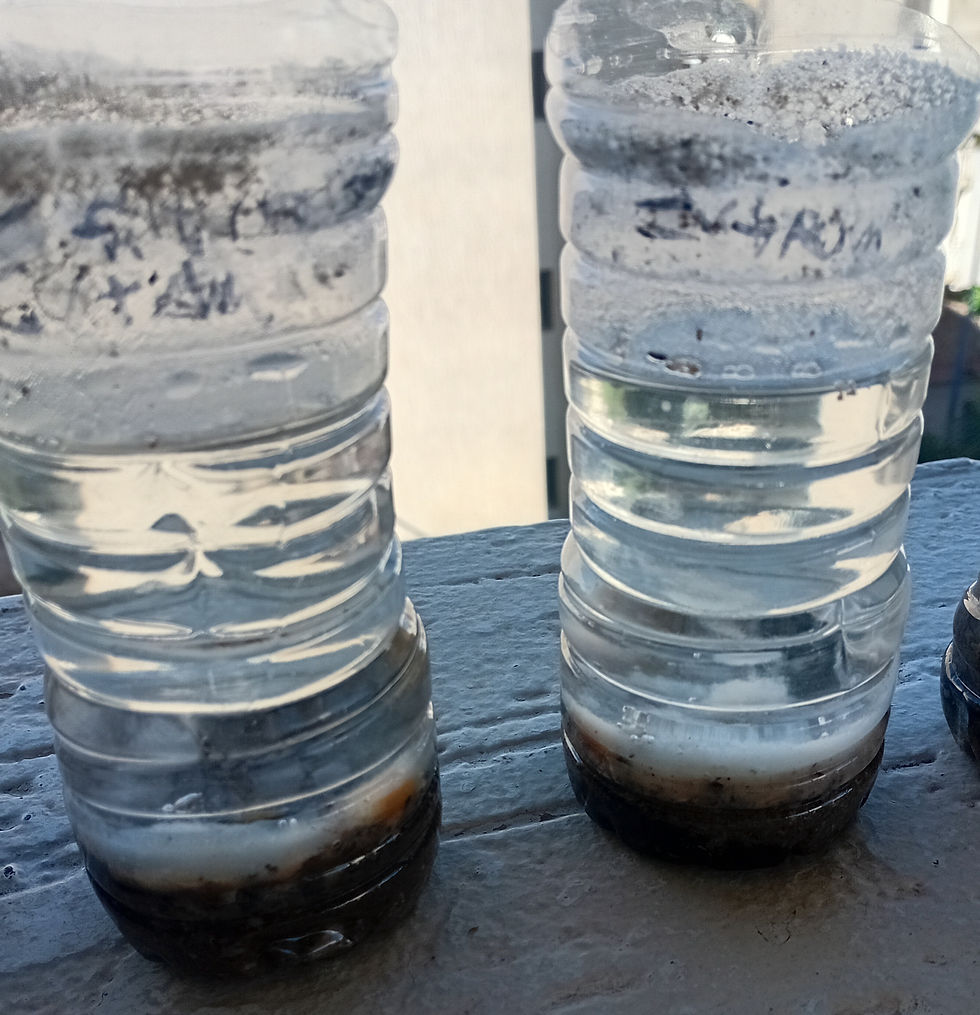
If you use Aluminum Sulfate, it will also creates Al(OH)3 as well as CaSO4. The two substances covers the surface of the soil (sand + shells) and it inhibits the further reaction with the acidic sea water. The particle of such sediment is very small as in clay and gypsum, so, shells and microorganisms in the sea floor is "protected" from acidic water and oxygen.
To driven the further reaction by acidification and elimination of anaerobic ecosystem sustained by cyanobacteria/ hydrogen requires removal of this white smoky layer on the floor.
Is Jesus Christ as Gesso as Crust?
Perhaps, this gypsum issue is the ultimate issue to solve coral reef/ hydrothermal vent origin terrorists. Gypsum has been associated with Gypsy (Christian spies in Spain who led the reconquista against Franco army regime). Gypsy especially has a strong relation with "East" orthodox Christianity, namely, Dorian/ Aeolic Greece.
In Greek language, latin vowel of y/i sometimes becomes u. For example, Crystalline (as in crystalline silica such as quartz and sand) in English becomes Krustarillos in Greek. The old English form of Crystalline is "Chrystalline". Assumingly, this term has a strong relationship with "Chrysotile" (the major source rock of Asbestos) and earth's crust.
Crystalline Silica as Strong Enemy of Coral Reef
There are two types of Silica on the earth. The one is crystalline silica (e.g. natural quartz, sand, etc.) and the other is amorphous silica (silica gel, opal, etc.). Crystalline silica has a rigid and orderly lattice, and it is the main cause of Silicosis (a disease popular among anaerobes/ war criminals, which is similar to asbestosis caused by asbestos). It seems that Silica (90%+ of earth's crust) is fighting against war criminals and coral reefs. I think Silica is the "soil Gods".
In fact, war criminals' side often tried to destroy natural "crystalline" silica by burning it (e.g. Phoenician glass industry, silicone in silicon valley, silica gel, replacement of natural silica by hydrothermal synthetic silica in Eisenhower era in telecommunication industry*1, etc.). They mainly hate crystalline silica, and changed into "safer" form like silica gel (amorphous silica).
*1: Quartz has been the heart of telecommunication technology for a long time. Originally, natural quartz rocks were used, however, it was replaced by hydrothermal synthetic quartz since 1950s. I suspect that hydrothermal quartz is weaponized and used for cyber hacking since most hacking is caused by coral reef terrorists (hydrothermal vents).
As for asbestos, it is also one form of silica. And the most dominant asbestos are extracted from chrysotile (the sound is very similar to crystal). Since 1990s (after the fall of Soviet), war criminals of WWII furiously removed asbestos from buildings and banned it in construction. They are afraid of asbestos. Until 1960s (or 1988 in Soviet and Germany), asbestos had been used as gas mask to avoid toxic chemicals.
You can find that most rocks with asbestos contain Iron, Magnesium, Calcium (namely, the chemicals came out from the hydrothermal vents - origin of coral reef). For example, amosite is Fe7Si8O22(OH)2, Tremolite is Ca2Mg5Si822(OH)2. I suspect that the structure of asbestos were created as a result of the continuous battle between Silica and Hydrothermal Vent origin minerals (Iron, Magnesium, Calcium, etc.). The asbestos fiber is one of the strongest ways to seal such dangerous chemicals within static rocks.
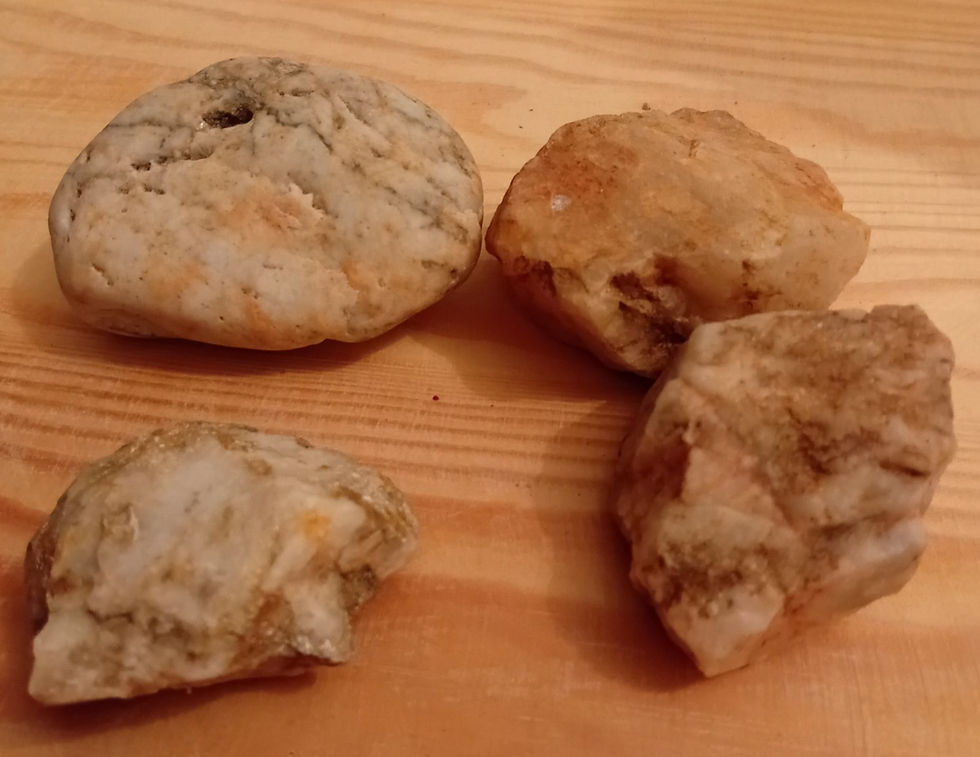
Quartz is considered as a igneous rock in the modern geology. However, I think most natural quartz rocks are sedimentary rocks while only some of them are igneous. The photo includes quartz rocks I found around my home. The 3 rocks expect the upper left one was found in land. The upper left rock was found on the beach, and it has porous structure unlike others. Such quartz stayed in the sea for a long time could be igneous, but others seem to be sedimentary. Also, its round shape was likely to be formed by hydrogen attacks*2.
*2: In the alkaline sea, quartz is attacked by hydrogen. It forms a dangerous orthosilicic acid (H4SiO4). Another reaction creates SiH4 (Silane) which is also regarded as very dangerous. When quartz in the earth's crust is weakened by hydrogen, our land becomes unstable. And it causes earthquake. Milky quartz often contains red layer (Fe3O4). But hydrogen also liberates raw iron from rustic iron in quartz, and increases sea water. Fe3O4 _ 4H2 -> 3Fe + H2O
In the current science, oxygen was allegedly emerged 3.85 billion years ago when cyanobacteria emerged. However, the oldest silica (SiO2) contain rock existed since 4.4 billion years ago. So, Silica (and oxygen) existed since before the emergence of cyanobacteria. Maybe cyanobacteria is a fake origin of oxygen.
How to Solve Gypsum Issue?
Anyway, I am struggling to solve this obstacle by gypsum layer. I found at least two possible solutions.
Adding organic soil layer on the top of the sea floor not to make gypsum layer. And repeat the process to add sand (silica = SiO2), soil, and alum
Repeating the process to add sand and alum and make gypsum to be rocks in the long run

I repeatedly added sand (or sand + soil in the left bottle), alum and sometimes natural milky quartz as a catalyst for the amount of the water reduced by the reaction in the previous day. So, the sea level stays almost the same.
The solution 1 (adding organic soil) dramatically inhibited making gypsum layer itself. So, the bottle with organic soil on the top of the floor does not have white milky layer (gypsum and Al(OH)3). It secures their relatively clear color of the water. For me, it seems that dissolving shells is still more active in the left bottle with organic soil even the soil + sand layer covered more than half of the bottle. But it could be mainly because their reaction is more visible due to the clear color of water.
As for the solution 2 (adding sand to cover gypsum), some liquid gypsum stays between the past sand and new sand layers. However, it mostly comes up (above the new sand) due to its particle size which is smaller than sand. So, as I added sand every day, the milky color became deeper and deeper. In fact, the color is very similar to milky quartz. German information said that the milky color of milky quartz came from gypsum contamination. So, I suspect that such combination of gypsum (density 2.32 g/cm3 in the liquid form) and sand (some information says 2.33 g/cm3, but others say 2.53-2.76 g/cm3) in the soil will form milky quartz since their density is almost the same (their locations in the soil are almost the same).
By repeating this process to add sand/ soil and alum, eventually, the bottles will be a new land (without sea water) since the bottles consume/ evaporate sea water everyday.
There are several points I noticed with this experiment:
Microorganisms in the sea water/ sand are most active since the sunset time to night than warm daytime
It was a big surprising for me, but a hot day time with strong sunshine (24 degree Celsius) did not evaporate sea water so much. Instead, the water reduced rapidly around the sunset time. So, just like land plants, the respiration by silica in the sea is most active in the sunset time. In fact, strong sunlight even helps shells (coral reef group) to fix their bodies. Sunlight is especially preferable for anaerobes/ coral reef group. Maybe few hours before the sunset is the best time to add sand, soil and alum.
Shells (CaCO3) come to the top of the sea floor after they emit CO2
The density of CaCO3 is 2.7 g/cm3. However, shells become more porous after they were partly melted by acidic water. Such porous structures have lower density. So, it comes above the sand.
Rocks with high percentage of Silica do not exist in living coral reef

The graph shows mineral assemblage of igneous rocks. Interestingly, only Olivine is found in the living coral reefs, and other rocks are not found, or only found in the fossilized coral reefs (namely, dead coral reefs). It implies that the environment with higher percentage of silica (SiO2) is a key to kill coral reefs.
In the Alkaline sea, magnesium absorbs Silica while Silica removes magnesium in the acidic sea. So, acidification accelerates the activity of SiO2.
Natural raw quartz can be a good catalyst of acidification, only after the sea became acidic

In one bottle, I put natural raw quartz rock as a catalyst. In fact, it accelerated the reaction and made lots of air bubbles. It showed how silica itself created oxygen. I suspect that the demarcation of organic/ inorganic in the pre-Pasteur science was the existence of Silica. In the modern science since Pasteur, organic is defined based on carbon. However, carbon itself does not emit oxygen by respiration (e.g. sugar does not make bubble when you put it in a cup of coffee).
Quartz in the acidification operation also has a risk to release Fe+ and increase sea water when the sea is still alkaline, mainly due to their red layer (Fe3O4). So, putting quartz is better to be conducted after the sea became acidic.


Comments