Botany/ Biology 1: Anaerobes and Pasteur
- Bon Habler
- Dec 31, 2025
- 7 min read

Updated: Jan 1
For a month and half, I have been studying about botany, biology and chemistry mainly because the main conflict in Sahara is farmers versus nomads (pastors). The structure is a very traditional conflict between farmers (or permanent residents) versus hunting people (invaders). I am on the farmers' side, and my ancestries were farmers. However, I had never studied botany/ biology/ chemistry aside from a very basic knowledge. I have started growing plants in my home and study related themes about seeds, structure of plants, soil etc.
There were so many discoveries in this new field for me. So, I will share most important issues that I found there.
Oxygen and Anaerobes
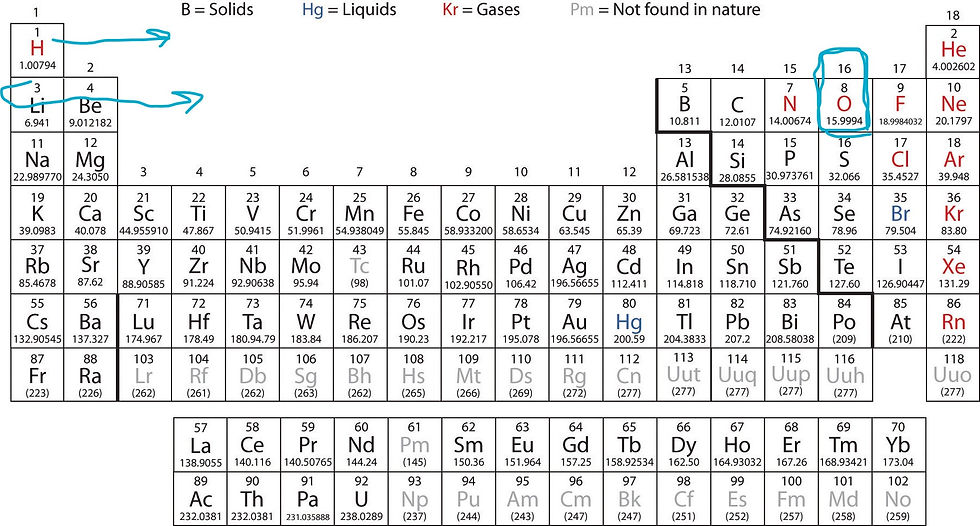
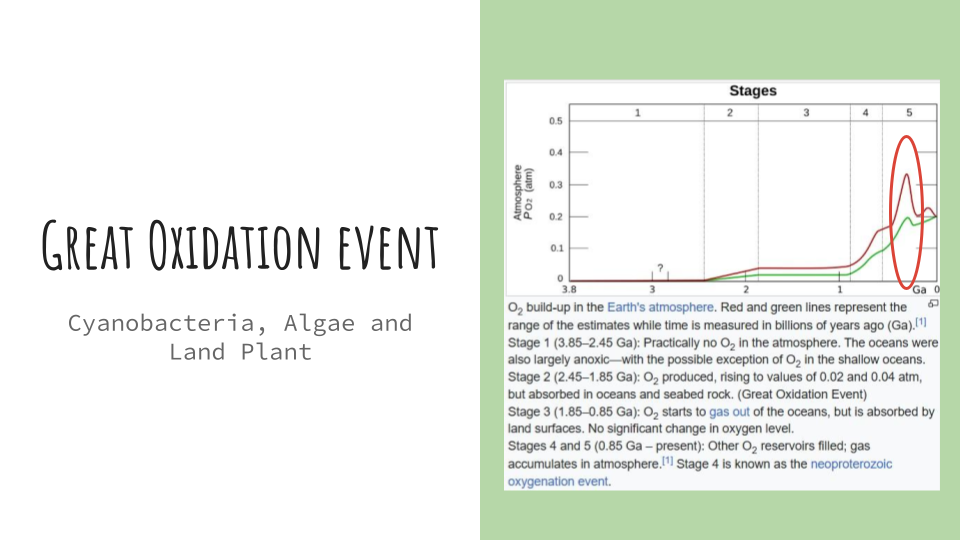
The biggest discovery was about the origin of oxygen - Cyanobacteria or Chlorophyll. Until the emergence of oxygen, the atmosphere of the earth did not include oxygen. The archaic atmosphere could have been composed of hydrogen, nitrogen, ammonium etc., because the chemical table is ordered from from the old atoms to new atoms. So, before oxygen, there were 7 atoms existed (H, He, Li, Be, B, C, N). When oxygen was emerged on the earth, many organisms who lived with the archaic atmosphere could not endure the new atmosphere, and they extinguished (Great Oxidation Event in 2.4- 2.1 million years ago).
However, some of such archaic organisms survived this event by hiding under shells, in the deep sea, in the lower part of soil, by partial adaptation to oxygen etc. Such archaic organisms which lived without oxygen are called anaerobic (non- aerobic) organisms. Although they survived the great oxidation event, they still hate oxygen or are vulnerable for the excess amount of oxygen. Many of them will die by the exposure to the a certain level of oxygen. So, such anaerobic organisms are fighting against aerobic organisms (those who respire with oxygen) and try to reduce oxygen on the earth.
Obligate and Facultative Anaerobes
Even within anaerobic organisms, there are diversities of their allowance level of oxygen. Some of them totally avoids oxygen (obligate anaerobes) while other anaerobes can accept oxygen partly. In fact, most anaerobes are facultative anaerobes (=partial anaerobes). However, such anaerobes causes most of the major diseases and infections to human such as Cholera, Botulism, etc. Cancers, Hepatitis C, HIV, Leukemia etc. are also linked to anaerobic environment.
Unlike aerobic respiration which makes CO2 from O2, anaerobic organisms have special respiration such as fermentation, anaerobic respiration which does not simply create Co2 from O2 etc. Since facultative anaerobes can partly accept oxygen, the respiration contains oxygen. However, it often makes harmful compounds of oxygen or other chemicals.
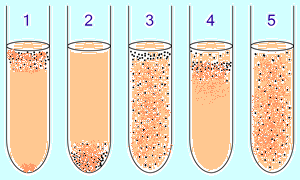
1. Obligate aerobes need oxygen because they cannot ferment or respire anaerobically. They gather at the top of the tube where the oxygen concentration is highest. 2. Obligate anaerobes are poisoned by oxygen, so they gather at the bottom of the tube where the oxygen concentration is lowest. 3. Facultative anaerobes can grow with or without oxygen because they can metabolize energy aerobically or anaerobically. They gather mostly at the top because aerobic respiration generates more adenosine triphosphate (ATP) than either fermentation or anaerobic respiration. 4. Microaerophiles need oxygen because they cannot ferment or respire anaerobically. However, they are poisoned by high concentrations of oxygen. They gather in the upper part of the test tube but not the very top. 5. Aerotolerant organisms do not require oxygen as they metabolize energy anaerobically. Unlike obligate anaerobes, however, they are not poisoned by oxygen. They are evenly distributed throughout the test tube.
Vitalism versus Pasteur's Cell Theory
Until 17th century, most scientists believed vitalism (assumingly, "animals" were defined only within aerobic organisms). Vitalism is translated as "生氣論/ 生気論" in Chinese and Japanese, which means "living air theory". However, the current name "Vitalism" in English and other European languages conceals the importance of "air" in this theory.
It was even difficult to find a Latin origin word for "air" in modern sense. In my Latin dictionary, it says "aer". However, aer is a Greek origin word for air. As for Latin equivalent word for air, maybe it was "anima" which means air, breath, life and soul. In the late Latin when it was already destroyed by Spartans and other invaders, its main meaning became soul. However, you can not assume the correct meaning of the famous Latin phrase "Aqua, Terra, ANIMA et Sol" if you simply think that anima means soul. The phrase is about the basic four components of the world - water, soil, air and sun. It is likely that the original name of the biological theory Vitalism was "Animism" (which is very natural to be translated as "living air theory" in Japanese and Chinese). However, the current meaning of animism is already destroyed by cult faction.
In any case, until 19th century, the main theme of biology/ medicine was mainly about aerobic humans and aerobic animals based on vitalism and Humorism (humor means body liquid in human body such as blood, bile, etc.) However, Pasteur and his allies dramatically changed biology theory into Cell Theory or anaerobes centralism (or, urine/ phosphorus centralism). You can find that the recently education teaches photosynthesis to create ATP (phosphorus related substances) and energy, but it dramatically ignores oxygen. I was very surprised at it because I learned that photosynthesis was the process of plants which mainly created oxygen from CO2. In addition, the Pasteur faction revised the definition of Chlorophyll (the core factor to conduct photosynthesis) to the one including anaerobic organisms. Since their definition of photosynthesis is based on the creation of "energy", oxygen does not matter. The current definition of Chlorophyll has "non-oxygen produced" types.
It is likely that DNA theory is also from Pasteur faction because their core substances Nucleotide bases (CGAT) to determine DNA are all related to urine and phosphorus. James Watson, alongside Francis Crick, famously co-discovered the double helix structure of DNA in 1953 (their paper about DNA theory was published on April 25, 1953). It was the era of Eisenhower (presidency: Jan 20, 1953 - 1961) or after the reconquista of Japanese empire via Korean War (June, 1950- July, 1953). So, this theory is originated in war criminals of WWII.
In mid-March 1953, Watson and Crick deduced the double helix structure of DNA.[2] Crucial to their discovery were the experimental data collected at King's College London—mainly by Rosalind Franklin, and for which they did not provide proper attribution.[28][29] Sir Lawrence Bragg,[30] the director of the Cavendish Laboratory (where Watson and Crick worked), made the original announcement of the discovery at a Solvay conference on proteins in Belgium on April 8, 1953; it went unreported by the press. Watson and Crick submitted a paper entitled "Molecular Structure of Nucleic Acids: A Structure for Deoxyribose Nucleic Acid" to the scientific journal Nature, which was published on April 25, 1953.
During Korean war in 1952, such anaerobic war criminal scientists also conducted Miller-Urey Experiment, which aimed to simulate the emergence of anaerobic organisms based on anaerobic model atmosphere without oxygen. Although oxygen should not have existed in the archaic atmosphere before the emergence of oxygen, they mistakenly used water (H2O). So, it may have produced artificial anaerobic organisms mistakenly.
The Miller–Urey experiment,[1] or Miller experiment,[2] was an experiment in chemical synthesis carried out in 1952 that simulated the conditions thought at the time to be present in the atmosphere of the early, prebiotic Earth. It is seen as one of the first successful experiments demonstrating the synthesis of organic compounds from inorganic constituents in an origin of life scenario. The experiment used methane (CH4), ammonia (NH3), hydrogen (H2), in ratio 2:2:1,[3] and water (H2O). Applying an electric arc (simulating lightning) resulted in the production of amino acids
Anaerobic Humans Exist?
Although Miller and Urey allegedly conducted the experiment to simulate the creation of anaerobes based on model archaic atmosphere without oxygen, anaerobic organisms already existed since before 1952. For example, Japanese empire bioterrorism unit (unit 731) used an facultative anaerobic bacteria, Bacillus anthracis during WWII. Also, Cholera is regarded as a facultative anaerobe. The pandemic of Cholera started in India in 1817. Louis Pasteur (1822-1895) researched anaerobes based on Beer brewing (fermentation). It is very likely that Pasteur weaponized such anaerobic bacteria to make bioweapons (in fact, the patent of Coronavirus is owned by Pasteur Institute). So, anaerobic organisms existed at least since 17th century, but I think their origin is further old.
If anaerobic (at least, "partial" anaerobes = facultative anaerobes) organisms exists in the worlds of bacteria, naturally people think about the existence of anaerobic advanced animals including human.
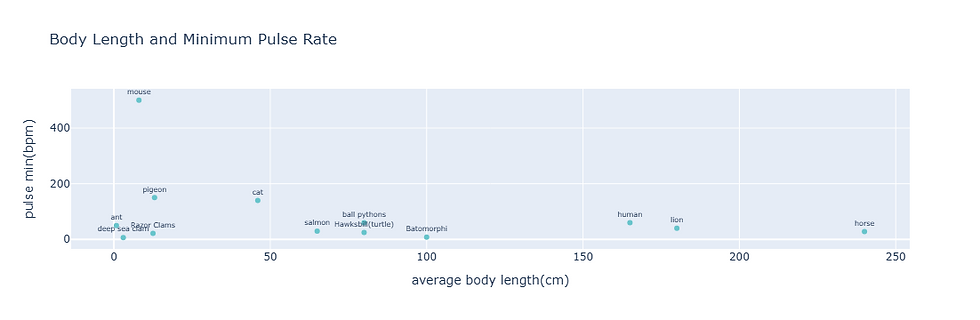
There are many fish and shells in the sea, which often do not need oxygen to live. Also, reptiles and moles kind of species mostly live underground nest. So, they also live without oxygen in a certain period. Such animals are called "cold blooded animals or ectotherm" as an opposite of warm blooded animals (including mammals and human). Oxygen is often used to maintain the body temperature of warm blooded animals. But cold blooded animals do not need to keep their temperature at high level. Their pulse rate or heart rate show the necessity of oxygen in their body. For example, humans' pulse rate is around 60-100bpm. But human athletes have lower pulse rate like 40bpm. I will explain it in details in another article, but muscle is linked to anaerobic metabolism than fat. Also, bigger animals tend to have lower pulse than smaller animals. However, very strong anaerobic species like deep sea clams, razor clams, ants (underground) etc. have exceptionally low pulse rate although they are very small. I roughly plotted the relationship between body length and minimum pulse rate of some species.
As for the "anaerobic human", as I mentioned above, athletes with strong muscles can be regarded as more anaerobic than general human. Aside from athletes, Rh- type people's blood is sometimes regarded as anaerobic blood. In fact, their body temperature and blood pressure is lower than the average of human. In addition, blood type O is suspected as anaerobic blood. Before, it was called blood type C, and the blood was the main cause of Hepatitis C. Hepatitis often happened due to blood transfusion. When a blood transfusion from blood type B caused hepatitis, it is called Hepatitis B. So, Hepatitis C was caused by blood type O's blood transfusion.
By the way, blood transfusion was regarded as dangerous in the medieval age, and it was banned for 150 years until the emergence of Pasteur faction.
To be continued.

Comments