Bavaria and Austria-Hungary V: Post-WWII & Displaced Persons Act
- Admin Gauge
- Mar 7, 2025
- 12 min read
Massive Refugees Issue in Post-WWII Era
After WWII, many people had to relocate due to the result of the WWII. Some people had to go back to their own countries, and other had to move to be caught (or to run away from such legal procedure).
In the current history (I mean that history is mostly written by "victors of the war"), UNRRA (United Nations Relief and Rehabilitation Administration) was established in 1943 to solve massive refugees problems. And it became the origin of UN. I explained history of refugee organization in the past article.
1914: CRB - Commission for Relief in Belgium - Wikipedia (Founded by Hoover) 1919: ARA - American Relief Administration - Wikipedia (The director was Hoover) (1920: League of Nations) 1942: MERRA (Middle East Relief and Refugee Administration) 1943: UNRRA (United Nations Relief and Rehabilitation Administration, the origin of Marshall Plan) 1946: IRO (International Refugee Organization) 1949: UNRWA (United Nations Relief and Works Agency for Palestine Refugees in the Near East) 1950: UNKRA (United Nations Korean Reconstruction Agency, Dec. 1), UNHCR (United Nations High Commissioner for Refugees, Dec. 14)
UNRRA and Mauthausen Concentration Camps
The UNRRA was established in 1943, and it was still during WWII. Around the year, the Gulag workers were purged by Stalin. (Stalingrad Front, Don Front etc.). Such people moved to Germany according to Russian information. So, it is likely that UNRRA originally helped such refugees (anti-Stalin, Leninist etc.)
Some of them may have been sent to Mauthausen Concentration Camps which included captives from Soviet. It is said that Louis Häfligar liberated this forced labor camp on 5th May of 1945. He was working as a food volunteer of Red Cross but functioned as a soldier. He accomplished to avoid the destruction of "Tunnel" (for smuggling of prisoners) and liberated the forced labor camp by US armored vehicles. Although he was working for the "neutral" Red Cross, it is written as a liberation by "US troops". It implies that Red Cross is pretending as a humanitarian organization although they are mercenaries (soldiers).
In den Mittagsstunden des 5. Mai fuhren zwei US-Panzerspähwagen, geleitet von Louis Häfliger, auf das Gelände des Lagers Mauthausen, das friedlich und ohne Blutvergießen übernommen werden konnte. Die Angaben zur Zahl der geretteten KZ-Insassen variieren je nach Quelle zwischen 40.000 und 60.000. EN: In the midday hours of May 5, two US armored reconnaissance vehicles, led by Louis Häfliger, drove onto the grounds of the Mauthausen camp, which was taken over peacefully and without bloodshed. The figures for the number of concentration camp inmates saved vary between 40,000 and 60,000 depending on the source. Source: Louis Häfliger – Wikipedia, Gusen | Willkommen
In Austria, it is written as a liberation by US troops, and Austria even has a street named after him to praise his liberation.
On the morning of the 5th May 1945 the village of Mauthausen was occupied by American troops and the majority of the SS men were taken prisoner. At roughly lunchtime, Louis Haefliger (a delegate of the International Committee of the Red Cross), who had been in Mauthausen for the past couple of days, led two American armoured reconnaissance vehicles to the camps. Despite the protests of the prisoners, the Americans left again after a couple of hours, leading several groups of prisoners to arm themselves, fearing that the SS might return. It was on the 7th May 1945 that 11th Tank Division of the 3rd US Army under the command of Colonel Siebel that the camp was finally taken over and permanently liberated.
Expulsion of Germans after WWII, Displaced Persons Act in 1948
In any case, UNRRA helped such Leninist/ Entente factions. And there were mass deportations of Germans after WWII. Most of the "refugees" who were sent to West Germany and Austria were likely to be the war criminals. At that time, German was divided by four parts. And the occupation area by UK, US, and France became the West Germany.
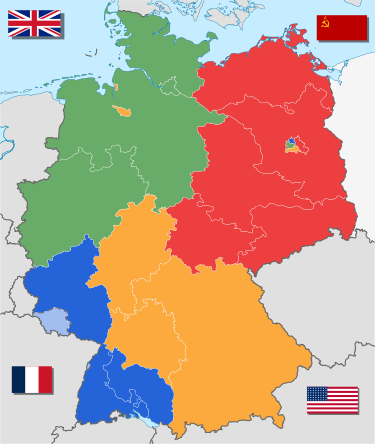
The later stages of World War II, and the period after the end of that war, saw the flight and forced migration of millions of German nationals (Reichsdeutsche) and ethnic Germans (Volksdeutsche) from various European states and territories, mostly into the areas which would become post-war Germany and post-war Austria. These areas included pre-war German provinces which were transferred to Poland and the Soviet Union after the war, as well as areas which Nazi Germany had annexed or occupied in pre-war Poland, Czechoslovakia, Hungary, Romania, northern Yugoslavia and other states of Central and Eastern Europe. The displacements occurred in three somewhat overlapping phases, the first of which was the spontaneous flight and evacuation of Germans in the face of the advancing Red Army from mid-1944 to 1945, the second a disorganized expulsion of Germans immediately following the German defeat, and the third a more organized expulsion following the Potsdam Agreement, which redrew national borders and approved "orderly" and "humane" expulsions of Germans from Poland, Czechoslovakia and Hungary. The major expulsions were complete by 1950, when the total number of ethnic Germans still living in Eastern Europe was approximately 2.6 million, about 12% of the pre-war total. Source: Expulsion of Germans after World War II
I mentioned about the mysterious sentence in the basis of IRO in the past article. It intentionally excluded "German origin persons" from the scope of their work. I thought that they wanted to exclude Prussia side of Germans who were expelled to East Germany because the current UNHCR mostly helps war criminal origin people only (not communists). But seemingly, they wanted to exclude war criminals side of Germans. However, US accepted such German refugees via 1948 Displaced Persons Act.
The Constitution of the International Refugee Organization, adopted by the United Nations General Assembly on 15 December 1946, is the founding document of the IRO. The constitution specified the organization's field of operations. Controversially, the constitution defined "persons of German ethnic origin" who had been expelled, or were to be expelled from their countries of birth into the postwar Germany, as individuals who would "not be the concern of the Organization."
In the Displaced Persons Act in 1948, it says that these German refugees were within the scope of IRO or even major refugees they helped. It means that IRO falsified their original constitution. In addition, the main target refugees by this 1948 act are the people who entered in Germany, Austria or Italy since September 1, 1939 to December 22, 1945. It did not aim to help local German officials/ people who resided in Germany since before 1939. Assumingly, many "Jewish" moved to Germany before 1939.
So, it seems that this Displaced Persons Act in 1948 mainly wanted to help mercenaries who moved to Germany, Austria or Italy from 1939 to 1945. Of course, such immigrants were likely to have been facilitated to move to Germany/ Austria by UNRRA or other refugee organizations. In 1939, there were some pact such as Molotov-Ribbentrop Pact between Stalin and Germany. However, the history is largely falsified. I can not believe that Ribberntrop (born in West Germany) made a pact with "Stalin" faction. Stalin conducted the Great purge in 1936-1938. Stalin may have cooperated with Prussia - East Germany faction, but other part of the two countries (for example, Lenin/ Khrushchev and West Germany/ Bavaria) may have cooperated to smuggle prisoners from Soviet since 1939. Then, it is understandable why Mauthausen (located in the Upper Austria) concentration camp included the "captives from Soviet", and IRO/ US wanted to help such prisoners with the sentence like "those who entered in Germany, Austria or Italy from 1939 to 1945".
Sec . 2. When used in this Act the term— (a) “Commission” means the Displaced Persons Commission created pursuant to this Act; (b) “Displaced person” means any displaced person or refugee as defined in Annex I of the Constitution of the International Refugee Organization and who is the concern of the International Refugee Organization. (c) “Eligible displaced person” means a displaced person as defined in subsection (b) above, (1) who on or after September 1, 1939, and on or before December 22, 1945, entered Germany, Austria, or Italy and who on January 1, 1948, was in Italy or the American sector, the British sector, or the French sector of either Berlin or Vienna or the American zone, the British zone, or the French zone of either Germany or Austria; or a person who, having resided in Germany or Austria, was a victim of persecution by the Nazi government and was detained in, or was obliged to flee from such persecution and was subsequently returned to, one of these countries as a result of enemy action, or of war circumstances, and on January 1, 1948, had not been firmly resettled therein, Source: STATUTE-62-Pg1009.pdf
Here are other important historical events.
March 1933: Hitler (or another person in East Germany) seized the power in Germany
Oct 1933: Germany's Withdrawal from League of Nations
1934: Soviet Joined in League of Nations
1936-38: Stalin's Great Purge
1938: Germany Annexed Austria
March 1939: Germany Annexed Bohemia and Moravia
Aug 1939: German-Soviet Pact
1 Sep 1939: German Attack on Poland (The date is the same as the "Eligible Displaced Person")
Nov 30 1939: Soviet Invasion of Finland
Dec 1939: League of Nations Expelled Soviet
Sep 1941: Nazi Invasion to Soviet
1941-: Stalin Expelled Volga Germans and Germans in Soviet to Remote Places
Stalingrad Front and Don Front (1942-43) also caused the mass arrest of imperial factions. Until then, possibly, the "Pfalz Germans" moved to Russia as a part of Lenin's GEOLRO (electrification of Soviet) and irrigation projects. Volga Germans are likely to have cooperated to construct Volga-Don canal. This purge caused the interruption of Volga-Don canal project. Such people were sent to remote areas such as Siberia, Kyrgystan, and Kazakhstan. And then, they were sent to Poland (Warthegau and Silesia). After that, they moved Altreich (old part of Germany, which was not within the area of annex since 1938).
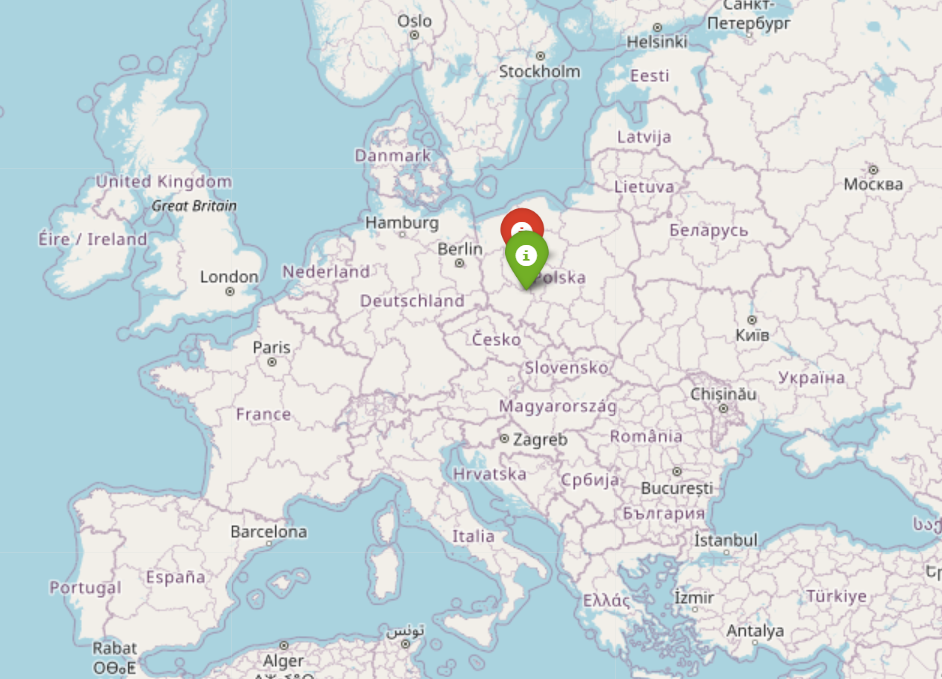
After the Nazi invasion of the Soviet Union, Stalin (in September 1941) ordered the forced resettlement of ethnic Germans living in Soviet-controlled parts of the USSR, as a potentially hostile ethnic population - most notably about 400,000 Volga Germans and about 80,000 Germans from Leningrad (St. Petersburg) and other areas - to remote areas in Siberia, Kyrgystan, and Kazakhstan, where they were forced to remain after the war. Many died during the resettlement. Those ethnic Germans who remained in Soviet-controlled territory despite the Nazi-Soviet population transfers, and whose settlement areas had become German-controlled before the Soviet authorities could resettle them, remained where they were until 1943, when the Red Army liberated Soviet territory and the Wehrmacht withdrew westward. From January 1943, most of these ethnic Germans moved in treks to the Warthegau or to Silesia (in Poland as shown in the map below), where they were to settle. Between 250,000 and 320,000 had reached Nazi Germany by the end of 1944. On their arrival, they were placed in camps and underwent 'racial evaluation' by the Nazi authorities, who dispersed those deemed 'racially valuable' as farm workers in the annexed provinces, while those deemed to be of "questionable racial value" were sent to work in the Altreich (old area of Germany, not annexed area after 1938). The Red Army captured these areas in early 1945, and 200,000 Soviet Germans had not yet been evacuated by the Nazi authorities, who were still occupied with their 'racial evaluation'. They were regarded by the USSR as Soviet citizens and repatriated to camps and special settlements in the Soviet Union. Some 70,000 to 80,000 who found themselves in the Soviet occupation zone after the war were treated the same way, based on an agreement with the Western Allies.
Summary
It is a very complicated issue. Let's check the text of the 1948 Displaced Persons Act again. Seemingly, there were two types of people whom this act wanted to help. I divided it into two part to make it easier to understand. The first part (those who entered in Germany, Austria or Italy from Sep 1, 1939 to Dec 22, 1945) obviously indicated the Volga Germans (Pfalz or Pennsylvania Germans) who were expelled from Soviet. And such people were sent to (or exiled to) Italy, US/ UK/ French occupation area of Germany and Austria. It seems that they were the people who were deported as a mass expulsion of German s after WWII.
(1) who on or after September 1, 1939, and on or before December 22, 1945, entered Germany, Austria, or Italy and who on January 1, 1948, was in Italy or the American sector, the British sector, or the French sector of either Berlin or Vienna or the American zone, the British zone, or the French zone of either Germany or Austria;
And the second part seems about the victims of persecution by Nazi government. But it this act, helping Nazi war criminals (Volga Germans from Soviet who constructed Volga-Don Canal) is more important that helping real victims persecuted by Nazi. This is why their sentence came the first.
or (2) a person who, having resided in Germany or Austria, was a victim of persecution by the Nazi government and was detained in
It is also noted that IRO and 1948 Displaced Persons Act type refugee aid project was conducted only in the area of Western occupation (namely, West Germany). Soviet did not cooperate with it, or they have other independent organization to deal with this issue.
Also, because of disagreements between the Western allies and the Soviet Union, the IRO only worked in areas controlled by Western armies of occupation
In addition, the origin of such refugee organization - CRB (Commission for Relief in Belgium) was founded by Hoover (Pfalz origin person who worked as a mining engineer). Hoover cooperated with League of Nations for the refugee issues. It seems that the West German occupation group (with UNRRA project) was the ally of Nazis, and helped Nazi soldiers as refugees after WWII.
Likewise, MERRA originally helped refugees who were persecuted by Stalin's Soviet and Germany (possibly, Prussia or German communists). Until then, it seems that Stalin and a certain part of Germany fought against the same enemy. Seemingly, this history is still falsified a lot.
Civilians from Eastern Europe and the Balkans migrated to the Middle East, crossing the Mediterranean Sea and Turkey to escape the Nazi and Soviet occupation during the harshest period of the war. The Middle East Relief and Refugee Administration (MERRA), established by the British in 1942, placed around 40,000 Europeans in camps set up in Syria, Egypt and Palestine.
Also, such refugees who escaped the occupation by Germany and Soviet moved to the middle east, and joined in the British Mandate Palestine. They are one of the earliest examples of Palestine refugees. But why do Palestine refugees) persecuted by Nazis as well as Jewish) fight against Jewish in Israel? It seems the Palestine refugees are the people who resent Jewish the worst in the world.
Destination of Displaces Persons
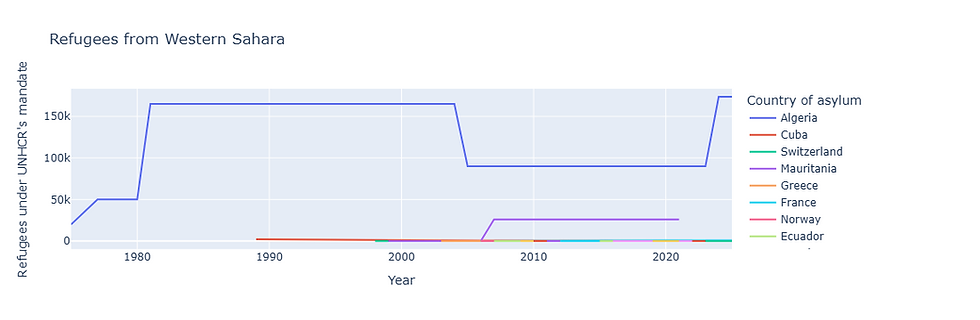
Such "displaced persons" mostly moved to US, France, Austria, and West Germany after 1948 Displaced Persons Act. Although UNHCR knew the origin of such refugees, their statistics recorded them as "origin unknown" (the country of origin of the refugee is unknown) as I analyzed UNHCR's data before. Until 1964, most refugees by UNHCR were "origin unknown". However, it seems such "origin unknown refugees" were the people defined by the 1948 Displaced Persons Act. Namely, they were the people who worked as Nazi soldiers from 1939-1945. Many of them could have been the Pfalz/ Kingdom of Bavaria/ Austria-Hungary Germans (or Habsburg) who constructed the Rhine-Main-Danube Canal.

Appendix: Evidences of Falsification of History
Also, it is revealed that all websites (including official/ governmental websites) which explain such history were uploaded only after 2016. It implies that such history was falsified in the process of the current war (ISIS war), or it was "newly" added since 2016. To check the archive of websites, Internet Archive Wayback Machine is useful.
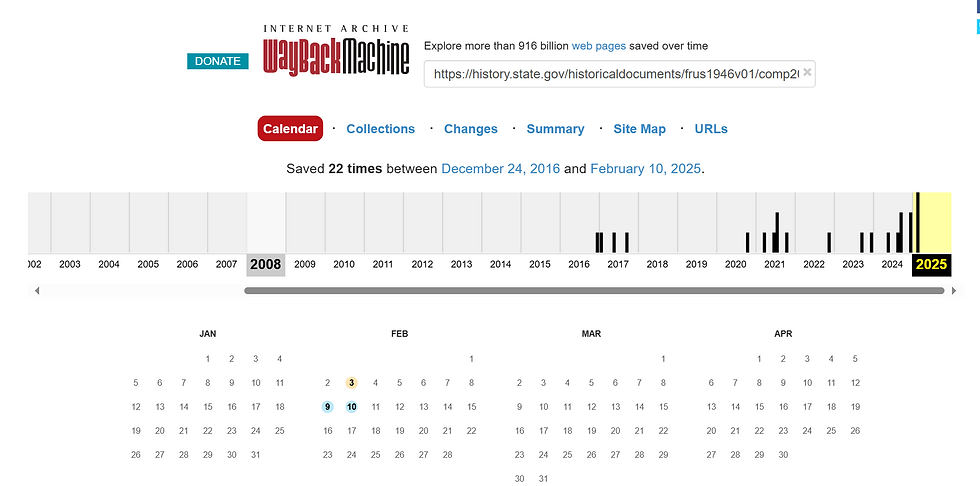
For example, this is the explanation of UNRRA by US government (Department of Historian). It started in the end of 2016 although the internet has been popular since 1990s or 2000s. It is too late to upload such an important information.
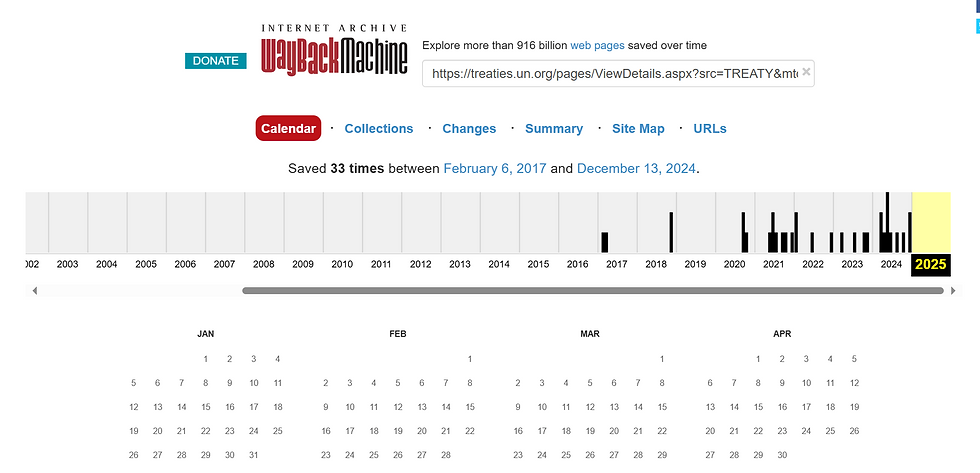
The next example is the explanation about IRO (International Refugee Organization) by UN Treaty Collection (UN Library of International Treaties). It started in 2017. It is too recent to upload for such an historically important issue. Also, many official websites themselves were renewed its domain around 2016. Perhaps, there was a worldwide coup against many governments during the ISIS war era and the history/ historic documents were falsified as a part of total governmental change.
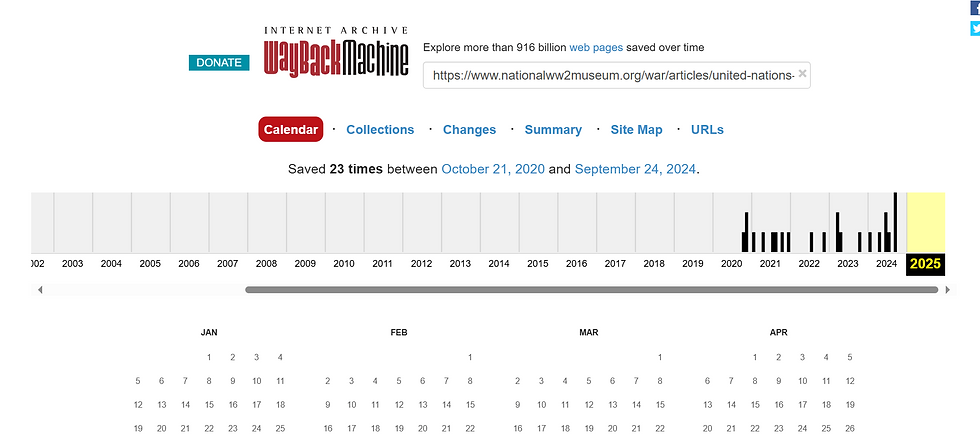
This is the example by the National WWII Museum in US. The website of this museum started in 2006, but the article about UNRRA was uploaded only after 2020.
Perhaps, all history about their refugee projects such as IRO, UNRRA etc. are lies. And they may have smuggled prisoners from the jail for the war criminals of WWII. I suspect that it was only Soviet (+East Germany) who won the WWII. However, the communist government lost the Cold War and it caused the fall of Berlin wall and Soviet. Since then, the history of WWI and WWII has been falsified a lot, as well as other part of the history.
Before, I heard that the German-French border area was a huge closed city and it was used as a jail for the war criminals of WWII. EU emerged from such area (Strasbourg) and the place of Hoovers CRB (Belgium). It was originated in the Coal Labor Union, which is one kind of mining industry. In Soviet, mining industry was the theme of forced labor for the worst war criminals. EU committed the coup against war victor communists. It may still continue in the Ukraine war.


Comments