Yugoslavia II: Origin of Yugoslavia and Kosovo War
- Bon Habler
- Mar 27, 2025
- 6 min read

Emergence of Yugoslavia
Since before WWI, Serbia and Montenegro (pro-Greek orthodox church, anti-Ottoman faction) invaded neighbor countries. After WWI, they established Kingdom of Yugoslavia for South Slavs who lived in Serbia, Montenegro, Austria-Hungary based on the Declaration of Corfu (1917). At that time (1916-1918), Serbian government/ army exiled to Corfu after Germany/ Hungary and Bulgaria occupied Serbia.. Also, Prince Phillip (the husband of the last British Queen) was born in Corfu in 1922. Assumingly, the island was used as a penal colony or concentration camp during WWI. Normally, a small island close to the mainland was used as a penal colony in the past.

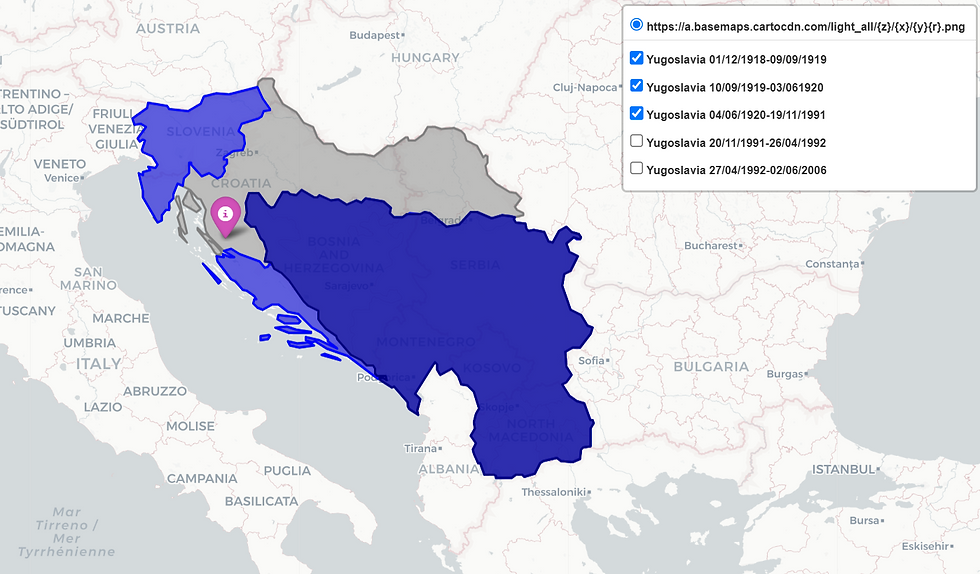
It is said that "Austria-Hungary" was a part of Central Power. However, I suspect that only Hungary part cooperated with Young Turk function during WWI. After WWI, Hungary covered Sarajevo, maybe because Young Turks faction won the war. However, their victory did not last long. One month later after the end of WWI, Sarajevo became a part of Yugoslavia. In 1920, the birth place of Nikola Tesla also became a part of Yugoslavia.
In any case, the conflict in Balkan (especially the battle between Bulgaria and Serbia) has a long history. So, I will explain about it in this article.
Serbia as the Birth Place of Constantine I (Founder of Byzantine)
The WWI was still an extension of the battle between Byzantine (Orthodox Christian Turkey or Business/ international trade group of Turkey) and Ottoman empire (Islam Turkey or Army Government of Turkey).
During WWI, the major structure of the conflict was like this.
[Germany, Hungary, Ottoman (Army, Young Turks), Bulgaria, Russia (Revolutionists)]
versus
[Habsburg, Bavaria, Serbia, Greece, Turkey (Janissary, Sultan), Entente (UK, France, Romanov)]
Germany, Turkey, and Russia had both factions, so, it had inner wars. Janissaries were the crypto-Christian navy (Byzantine faction) who served to Ottoman Sultan. This conflict is almost the same as "Ottoman versus Byzantine". Byzantine Empire is also called the East Roman Empire which adopted Christianity as a State Church.
Almost all neighbor countries were anti-Byzantine such as Islam Arabs, Bulgaria, Hun, Mongol Empire, even a part of "West" Roman Empire (e.g. Fourth Crusades in 1203) etc. because Byzantine was surely a dangerous political faction which cooperated with pirates. The first massacre against Jewish also happened in Byzantine.
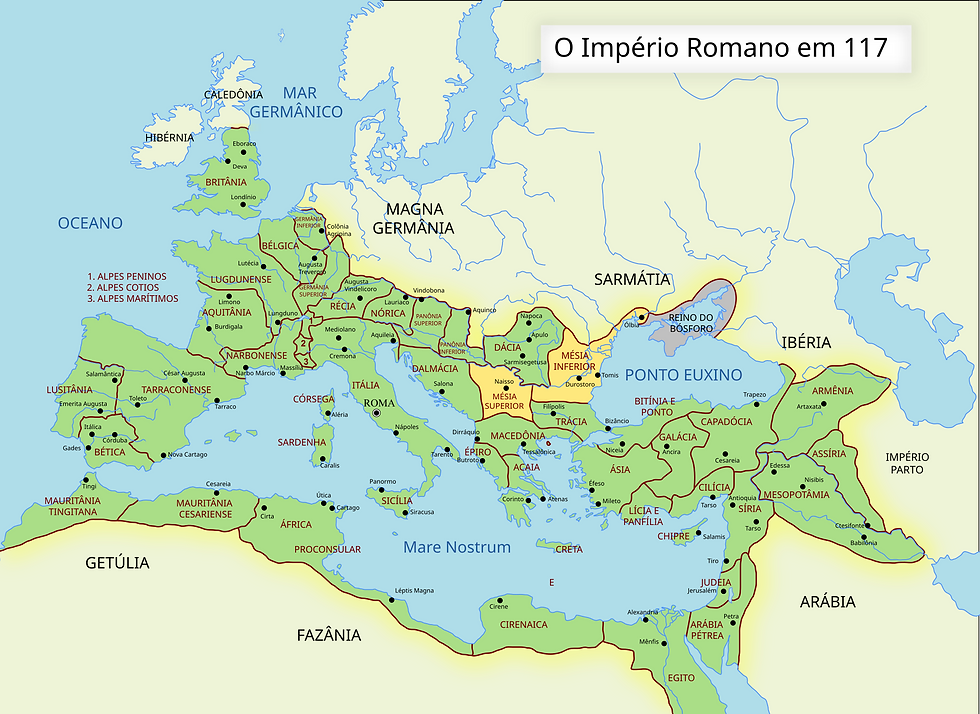
In any case, the origin of such unusually dangerous empire is not well known. First, in Constantinople (the capital city of Byzantine Empire), Dorian Greek language was spoken. Second, the founder Constantine I was born in Niš (Naissus), Serbia, and his father came from Montenegro. At that time, Niš was a part of Moesia (a province in the Roman Empire). In both map, the current Bulgaria is called "Moesia Inferior". Aside from this region, there was no other stigmatic name. So, it shows how Serbians (Moesia Superior, including Niš - the birth place of Constantine I) resented Bulgaria.

Aside from this incident, pirates - monarchists often destruct local languages by making one or two "superior" languages while they call the original local language as "Vulgar" language. For example, it is said that there were 3 types of Latin in Roman empire, such as Classical Latin, Ecclesiastical Latin (Church Latin) and "Vulgar" Latin. And the first two "superior" Latin is largely affected by Greek language. This term "vulgar" obviously came from criticism against Bulgarians.
Bulgarians Struggle against Byzantine in the 7th Century
In fact, Young Turks Revolution (1908) was largely affected by Bulgarians. The origin of Bulgarians are linked to Turks, Hun, or Iran, and such people have a long history to fight against Byzantine and Scythians. Old Great Bulgaria was located in the current East part of Ukraine such as Donetsk, Mariupol, etc. These are exactly the same places which want to become a part of Russia, and fight against Zelenski Ukraine. The "Volga" river is linked to "Bulgaria" but it was seized by Byzantine/ Scythian faction. And then, it became the current terroristic Volga river due to the irrigation project by the terrorists.
For example, Asparuh Khan fought against Byzantine, and he was forced to move to the current Bulgaria. This is the origin of the current place of the country Bulgaria. His father was the founder of the Old Bulgaria (in the current Ukraine). The title "Khan" is the name for a military commander or ruler in the Mongol Empire. It is said that Bulgarians and Muslims had been regarded as main enemies of Byzantine.

On the other hand, the major enemy of Bulgaria in Balkan - Serbians are Slavic origin. Early Slavic Tribes came from modern Poland. Slavic people were also called Vistula (the Polish spit used as a jail during German occupation era) Veneti. I suspect that such Slavic people share roots with Scythians and Dorians (pirates group). **The area of Scythians (Escitia) is almost the same as the area where Gulag fugitives ("Nomadic people" in the Helmand Valley project) had been spread. The Southern part reaches to Pakistan and Afghanistan.

"Illyrians" were the pirates who resided in the modern Montenegro, Bosnia and Serbia. It is said that Polish Vistula Veneti and Illyria had many mutual city names. It is likely that they shared the ethnical roots. From Illyria, they invaded East Italy. And East Italy has many East Orthodox Christian churches (Byzantine style churches).
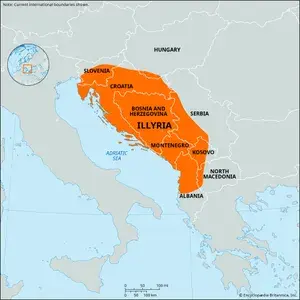
In any case, the structure of the conflict seems like this.
[Scythians, Byzantine, Illyrians, Slavs] versus [Turks, Hun, Mongol, Latin, Arab]
Obviously, the latter people are majority of the world.
Honestly, I felt a great frustration to investigate the issue related to Byzantine, Slavs and Serbians because I know that they are the worst cyber terrorists in the world and they falsified history a lot to make confusions. As an last paragraph, I trace the history from the independence of Serbia from Ottoman to WWI. WWI and Young Turks Revolution were not independent incidents from history.
Byzantine vs Ottoman from 1867 to WWI
Serbia had been under Ottoman empire until 1878. However, due to their history and ethnic reason, it has a strong Slav-Byzantine background. So, they fought against Ottoman to gains independence by cooperating with other orthodox Christian countries.
1857: Last Ottoman Army's Withdrawal from Serbia
1877-78: Russo Turkish War (Russia was under Romanov) - As a part of this war, Serbia captured Albania and purged Albanians. Some of them exiled to Kosovo.
March 3, 1878: Treaty of San Stefano
June 13, 1878: Treaty of Berlin
After the end of Russo Turkish war, they discussed about the possible partition of the land by Treaty of San Stefano. This treaty recognized the independence of Serbia, Romania, and Montenegro from Ottoman. Also, UK occupied Cyprus, Austria-Hungary occupied Bosnia, Greece annexed Thessaly and Arta etc. The treaty was greatly inclined to Byzantine faction (Serbia, Montenegro, Romania, UK, Greece, Austria etc.) Due to such unfair condition, the Congress of Berlin was held by Bismarck of Prussia to improve it.
In the Treaty of Berlin, Bulgaria became semi-independent country (semi-independent from Ottoman), Macedonia was returned to Ottoman etc. Due to this treaty, Bismarck started to have been disliked by Romanov and Slavic people. And then, it became the trigger of the first Balkan War and WWI.
1893-1912: Macedonian Struggle
1897: Greek Turkish War
July 3-, 1908: Young Turks Revolution started in Resen (Macedonia)
Oct 7, 1908: Austria-Hungary Annexed Bosnia
Oct 12, 1912-30 May, 1913: First Balkan War
[Greece, Serbia, Montenegro, Janissary (Sultan), Bulgaria (Orthodox Christians)] vs [Ottoman, Bulgaria]
June 29- Aug 10, 1913: Second Balkan War - Bulgaria attacked Serbia and Greece
After the Berlin Treaty, Macedonia was returned to Ottoman. However, the orthodox Christian alliance wanted to seize Macedonia. So, there were continuous battles in Macedonia between Greeks (Greek Orthodox Christians) and Bulgarians (pro-Ottoman faction). Greek side was supported by Serbia and Romania while Bulgaria was supported by Albanians and Ottoman. In this context, Greek-Turkish war in 1897 and Young Turks Revolution happened. Young Turks mainly fought against "Sultan" of Ottoman empire, but "Sultan" is the director of Janissary. So, Sultan was a Byzantine faction in Ottoman.
In the second Balkan war, it is said that Bulgaria was defeated on wikipedia. However, historical map shows something different. Bulgaria lost north part of its realm in 1913, however, it expanded to the South which was a part of Ottoman before. However, seemingly, Greece invaded the south part of Bulgaria in 1919 (after WWI).
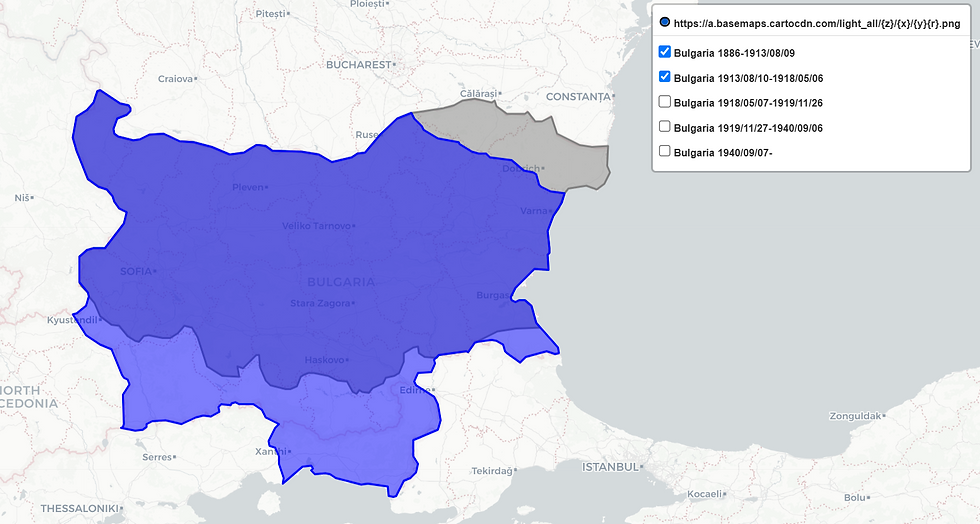
Until 1910s, there were battles between Byzantine (Orthodox Church faction) and Ottoman in Balkan peninsula. Bulgaria fought against Greece in Macedonia and North East Greece. Young Turks revolution happened in 1908. Austria annexed Bosnia soon after the Young Turks revolution. Austria is a Slavic country although it tries to pretend as an ally of Prussia or ally of Hungary.
And in 1914, the assassination of Ferdinand of Austria happened in Sarajevo (Bosnia). Propaganda says that Ferdinand was killed by a pro-Yugoslavia faction of Serbian man, I think that he was killed by some from Young Turks or Ottoman faction. After WWI, Austria and Hungary became separated.
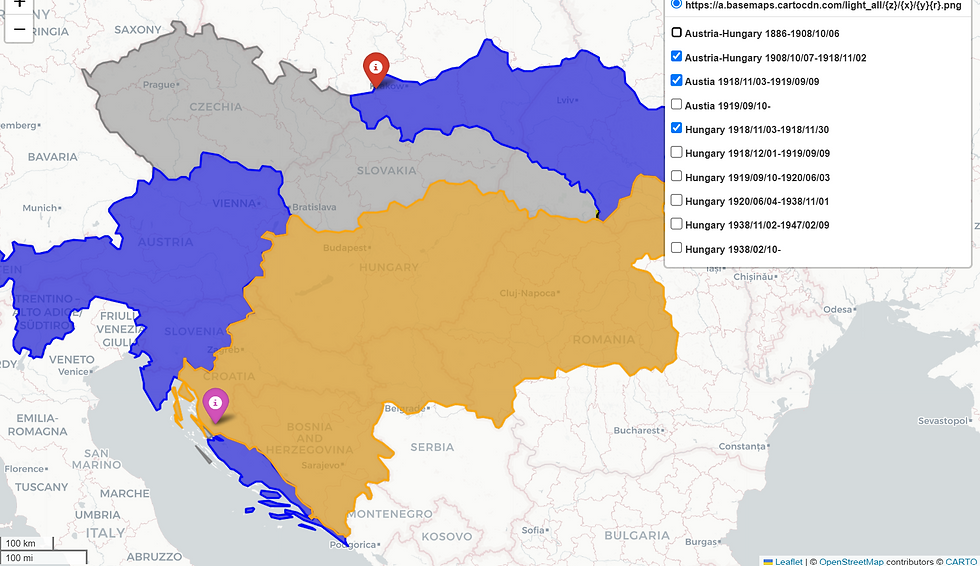
Here is the partition of Austria-Hungary empire by Austria and Hungary in 1918. It seems that Hungary had much larger realm than the current Hungary. It covered a part of Romania, Serbia, Croatia, Bosnia and Montenegro. Hungary lost such realm only in 1920 (after the establishment of the League of Nations in January or after the mass labor strike in Yugoslavia since April).
There are still many mysteries remain. However, due to numerous propaganda, it is extremely difficult to find trustworthy information related to this topic. I will go back to more modern history in the next article.

Comments