Yugoslavia III: Postwar Yugoslavia and Energoprojekt
- Admin Gauge
- Mar 30, 2025
- 7 min read
Energoprojeckt and UNRRA
Russia has the infrastructure company Hydroproject which sustained the Lenin's GOELRO (electrification of Russia) and the forced labor projects of Gulag prisoners. Yugoslavia also had a similar infrastructure company, Energoprojekt. Their Bosnian part is called Energoinvest, which was led by Emerik Blum who was also arrested as well as his wife by German authority during WWII and resented Germany. His wife was born in Chisinau (Kishinev) in Moldova (at that time, it was Romania). Kishinev was functioned as a hidden shelter for the "refugees" of WWI, especially from Russian empire . Namely, the Romanov faction and Orthodox Christians (not Jews, but "Armenians" and orthodox Christians or "Romaniote" Jews unlike propaganda) exiled to Kishinev. It was also a command center of Russian military (Romanov militia) during the Russo-Turkish war in 1877-78. So, the city was intensively attacked by Soviet/ Germany army during WWII and lots of people were arrested. It was Khrushchev who reconstructed Kishinev by Khrushchevka (Khrushchev style industrial architecture).
UNRRA started their activity in 1943 to help "refugees" in Europe (mostly those who were arrested/ purged by Germany and Stalin Soviet). UNRRA was under the authority of Supreme Headquarters Allied Expeditionary Force (SHAEF) whose head was Eisenhower until the end of WWII.
September 3-17, 1943: Allied Invasion of Italy
November 9, 1943: Agreement for United Nations Relief and Rehabilitation Administration (UNRRA)
It is strange that this agreement does not include the case when the Allied forced itself had to withdraw and allied forced became the prisoners of the war. As far as I know, the UNHCR type organization always help their own soldiers but they never help the enemy soldiers. As a recent example, UNHCR never helped refugees of Assad regime when the coup forces oust Assad regime. So, assumingly, this document was falsified. And UNRRA mainly helped the their own soldiers when the soldiers were captured by their enemy.
Being determined that immediately upon the liberation of any area by the armed forces of the United Nations or as a consequence of retreat of the enemy the population thereof shall receive aid and relief from their sufferings, food, clothing and shelter, aid in the prevention of pestilence and in the recovery of the health of the people, and that preparation and arrangements shall be made for the return of prisoners and exiles to
Signatory members are the followings.
[The agreement was signed by representatives of Australia, Belgium, Bolivia, the United States of Brazil, Canada, Chile, China, Colombia, Costa Rica, Cuba, Czechoslovakia, Dominican Republic, Ecuador, Egypt, El Salvador, Ethiopia, French Committee of National Liberation, Greece, Guatemala, Haiti, Honduras, Iceland, India, Iran, Iraq, Liberia, Luxembourg, United Mexican States, Netherlands, New Zealand, Nicaragua, Norway, Panama, Paraguay, Peru, Philippine Commonwealth, Poland, Union of South Africa, Union of Soviet Socialist Republics, United Kingdom of Great Britain and Northern Ireland, United States of America, Uruguay, Venezuela, and Yugoslavia. The agreement was signed on behalf of 14 governments with a reservation or statement to the effect, in each case, that the agreement was signed subject to ratification or legislative approval. The 14 governments on behalf of which the agreement was signed with such a reservation or statement are as follows: Chile, Colombia, Cuba, Ecuador, Ethiopia, Guatemala, India, Iran, Iraq, United Mexican States, Nicaragua, Peru, Uruguay, and Venezuela.]
UNRRA was the origin of Marshall Plan (post-war industrial reconstruction plan). So, assumingly, Energoprojekt in Yugoslavia was also established by cooperating with UNRRA.
Abolishment of Monarchy in Yugoslavia
Just like other East European Countries, Yugoslavia also experienced the dissolution of monarchy system in 1945. Since 1941, the Peter II of Yugoslavia exiled to Greece, Palestine, Egypt, and then UK. He formed the Yugoslav government in exile.
On the other hand, the country Yugoslavia was led by National Committee for the Liberation of Yugoslavia (the head is Tito).So, naturally, Tito was originally fought against Peter II (monarchy of Yugoslavia). Macedonia has a brother organization (Anti-fascist Assembly for the National Liberation of Macedonia), and it was established in the area where Bulgaria occupied within Yugoslavia. So, originally, it is likely that Communist faction of Yugoslavia fought against Habsburg Monarchists by cooperating with Prussia Germany, Stalin Soviet, Bulgaria, Macedonia (Young Turks) etc. Or, there were two communist factions jut like in Soviet.
After the WWII, Ivan Ribar became the president of Yugoslavia (term: 1945 - 1953). He contributed to abolish monarchy.
Ivan Ribar presided over the Second Session of AVNOJ on 29 and 30 November 1943. At this session, it was decided that New Yugoslavia be formed, and the Government of the Kingdom of Yugoslavia in exile and King Peter II Karađorđević were forbidden to return to the country until the end of the war.
On 29 November 1945, he presided the Provisional National Assembly and opened the constituent session of the Constituent Assembly. At the session the Declaration on the Proclamation of the Federative People’s Republic of Yugoslavia was accepted, by which the monarchy was abolished and the republic declared. At the session of the Constituent Assembly on 1 December 1945, the Presidency of the Constituent Assembly headed by Ivan Ribar was elected. Dr Ivan Ribar was the head of the Presidium until the abolition of the Presidium in 1953, when the office of the President of the Republic was introduced, to which Josip Broz Tito was elected.
In 1953, Tito became the President of Yugoslavia. Due to the politics in Soviet, his term was much affected by Khrushchev (term : 1953-1964). However, the zombie of Lenin's GOELRO - "Energoprojekt" in Yugoslavia was already established in 1951. Also, Tito was served as the president of Yugoslavia until his death (1980). It means that he was not purged after the end of Khrushchev-Kennedy anti-communist alliance regime in 1964. So, it is likely that Tito was also a real communist but not a Lenin Federalist.
In any case, the revival of Habsburg was gradually stated since the establishment of Energoprojekt in 1951. And Energoprojekt largely cooperated with the coup against the Socialist Yugoslavia.
In fact, after Energoprojekt dealt with irrigation projects and hydropower plants in 1960s flood started to happen in Yugoslavia. The first flood attacked Zagreb, the birth place of Ivan Ribar.
60 Years History of Energoprojekt
(Introduction of Energoprojekt)
The company was established in 1951 to reconstruct the post-war (WWII) Yugoslavia. It originally dealt with irrigation and hydropower projects around Danube river. In 1954, it started to research about using water of Danube from Romanian to Bulgarian border. This Danube project was largely developped in 1960s.This project started in the Khrushchev era (many Gulag prisoners were released in his era). So, assumingly, such released Gulag workers also moved to Yugoslavia via Black Sea/ Danube route as a part of irrigation/ hydropower projects. Also, Adriatic sea had pirates origin immigrants called Illyrians. It is identified as prophet Ilias (or Elias). Elias is identified as the John of the Gospel of John (the book which justifies floods, earthquake and pandemic as "anger of God". Based on their cult, massacre is needed to welcome messiah - ritual murder). I suspect that the "John" of the Gospel of John is John F. Kennedy. In fact, Kennedy also approached to Tito in 1960s.
Basins of the following major waterways in Serbia were analysed: the Drina, the Lim, the Southern and Western Morava, the Danube... Designing and commissioning of small hydro power plants began: Sokolovica (1951), Seljašnica (1952), Sapunčica (1952), while work on increasingly complex and larger power projects continued: HPP Vrla I - IV (1958), Mavrovo dam, Macedonia (1957), HPP Perućica, Montenegro (1960), the first unit of the HPP Bistrica on the river Uvac, was put into operation (1960) Study was initiated (1954) of basic solutions for using water of the Danube from Romanian to Bulgarian border, including HPP Djerdap I (Iron Gate)

In 1960s -80s, the company expanded its business to Middle East (Lebanon, Syria, Egypt, Iraq, Kuwait etc.), Asia (Cambodia - right before the Khmer Rouge), Africa (Morocco, Libya, Kenya, Sudan etc.), as well as the further development of Yugoslavia. After the Yugoslavian war, this company further expanded its business because they were likely to be on the Globalists' side.
One of the most notable part of this company is the link with "Nikola Tesla", a Serbian inventor. In 1970s, Energoprojekt constructed thermal power plant units named after Nikola Tesla.
At home, new thermal power plant units were put into operation: Kosovo A – unit V (1975), Nikola Tesla A – units III and IV (1976) and V & VI (1979) TPP Nikola Tesla A has a total installed capacity of 1,650 MW, and TPP Nikola Tesla B 1,240 MW. Together, both plants made almost 40% of the Serbian electric power industry's installed capacity
Nikola Tesla and His Inventions
In 2010s, I heard the name of Nikola Tesla as the inventor of remote communication and the inventor of a weapon to cause artificial earthquake. Seemingly, he was also the inventor of Hydroelectric Power Plant.
I don't know the exact politics around his invention, but his inventions are surely weaponized and used for invasion/ colonization of other countries by "foreign development group". Even, Lenin's GOELRO was based on the invention of Nikola Tesla.
Tesla was born in Smiljan, Croatia in 1856. And he died in 1943. His father was an Orthodox Christian priest. Smiljan was a part of Austria-Hungary empire during WWI. When Tesla was born, it was a part of Austrian empire. However, the empire was dissolved after WWI and Smiljan became a part of Hungary from November 3, 1918 to 1920. And then, it became a part of Yugoslavia.
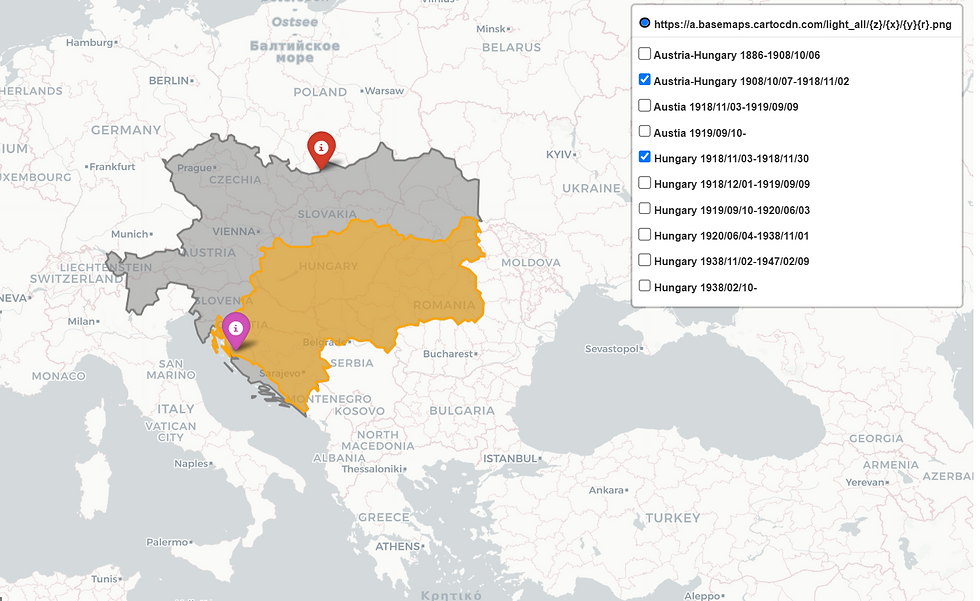
The infrastructure facilities constructed by Energoprojekt (ibncluding the Thermal Power Plant Nicola Tesla) were largely destroyed during the Yugoslavia war, at least by NATO (especially Germany and Italy). It implies that such infrastructure was suspected as weaponization or cover of terrorist hubs.
Next time, I will write about the Yugoslavian war in 1980s-1990s.
Comments